
Additive manufacturing has made it possible to design parts that were unthinkable a decade ago. Internal structures can now be tuned for stiffness, weight, energy absorption, or heat transfer, and much of the next generation of performance gains will come from what happens inside the part.
But designing an internal structure is only half the job. Before a part goes anywhere near a printer, engineers need confidence that it will carry its loads. That question usually gets answered somewhere else.
The gaps engineers work around today
The first gap is between tools. A design is finished in one environment, exported, and rebuilt as an analysis setup in another. When the results call for a change, the loop starts again: edit, export, set up, analyze. Each handoff costs time, and each one is another chance for the analysis to drift from the design it is meant to check.
The second gap is in the geometry itself. Complex internal structures are demanding to analyze, and a common workaround is to check a simplified representation rather than the structure as designed. That leaves engineers reasoning about a stand-in rather than the part they intend to print.
The third gap is access. Structural analysis often depends on a dedicated desktop installation, capable local hardware, or a specialist team. That puts distance between the people shaping the design and the answers they need to shape it well.
What changes with sphereneNXT 2.0
Integrated simulation is not new in engineering software. What matters is where it lives and who it reaches.
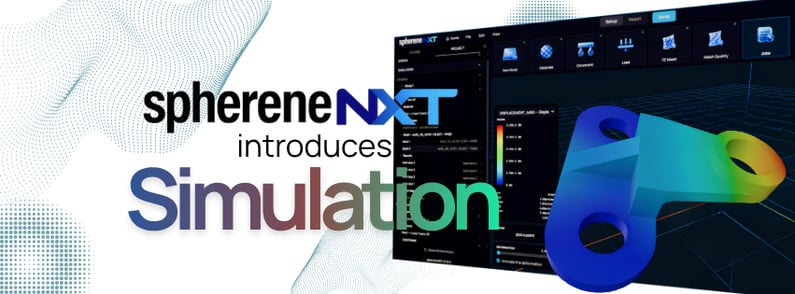
With v2.0, Simulation becomes part of sphereneNXT, and it runs where you design: in the browser. There is nothing to install and no workstation to size for the job. Studies solve in the cloud, and the results come back to the part in front of you.
A study runs on any geometry, whether you generated it in sphereneNXT or imported it, including parts with ADMS, TPMS, and Beams internal structures. Generates meshes and simulates the structure you actually designed, not a simplified stand-in.
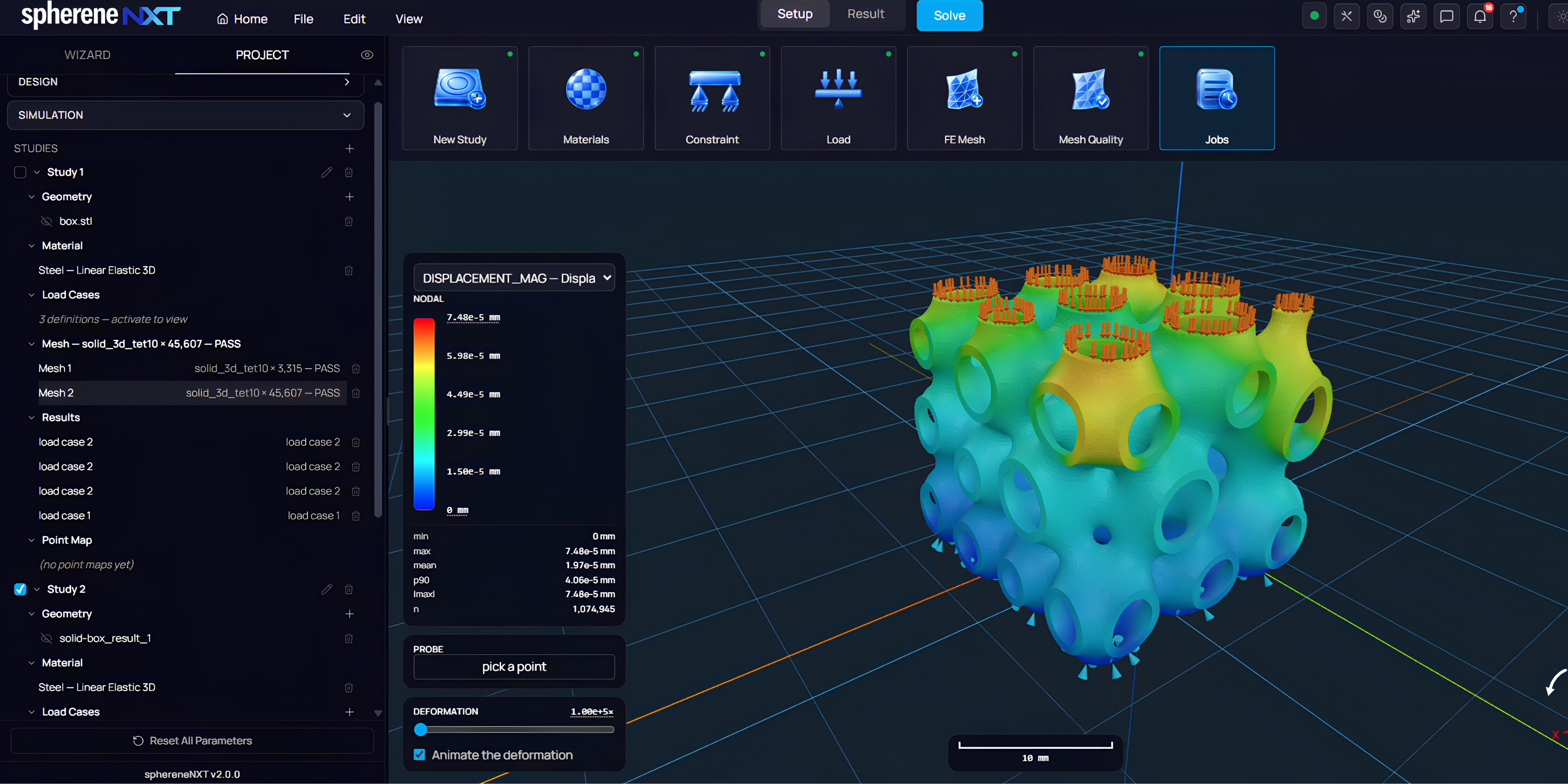
Simpler does not mean simplified. Simulation is built on finite element analysis, the same method engineers already rely on for structural checks, with control over element type, mesh quality, and solver choice. What gets removed is the friction around the analysis, not the precision inside it.
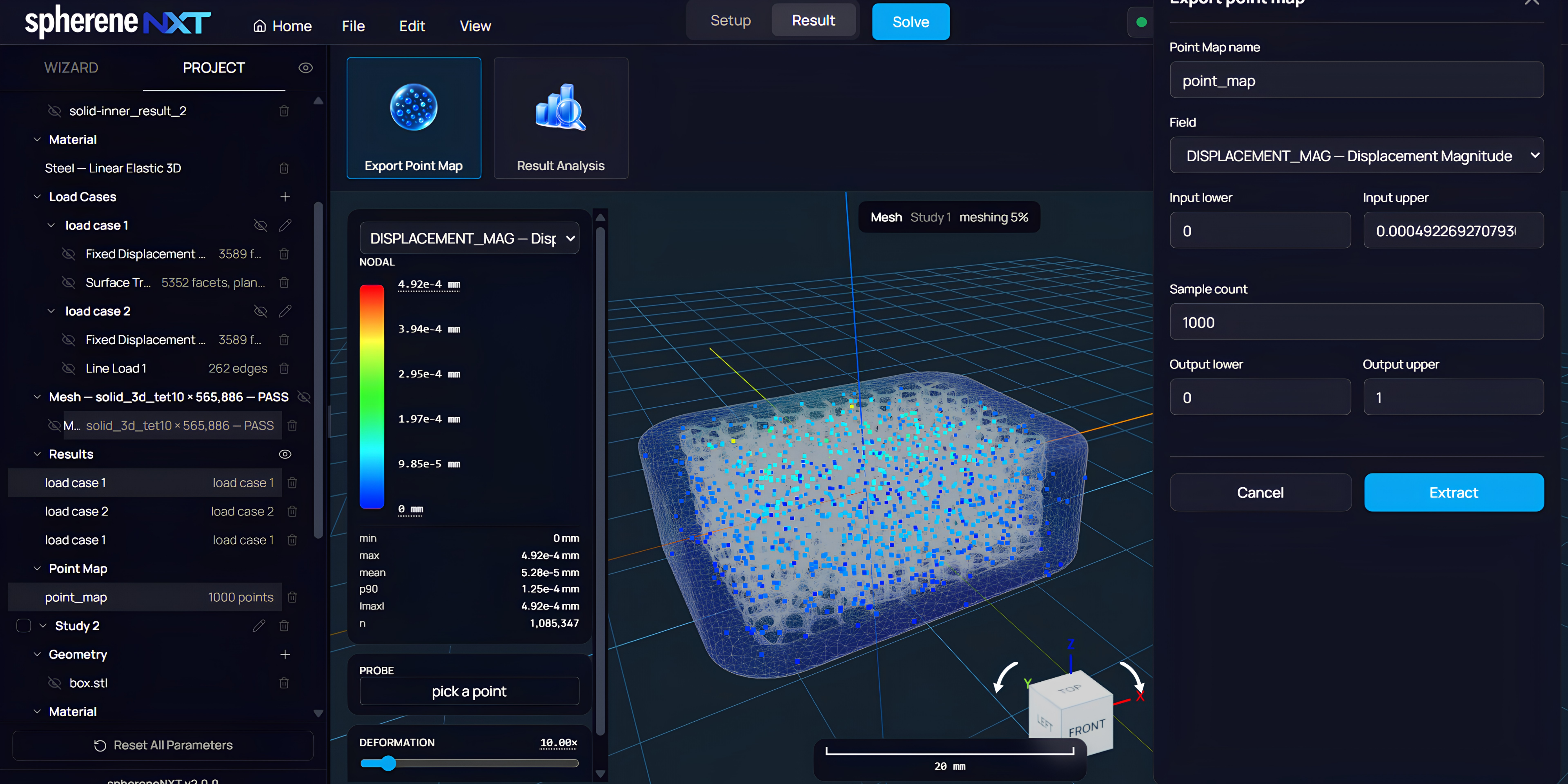
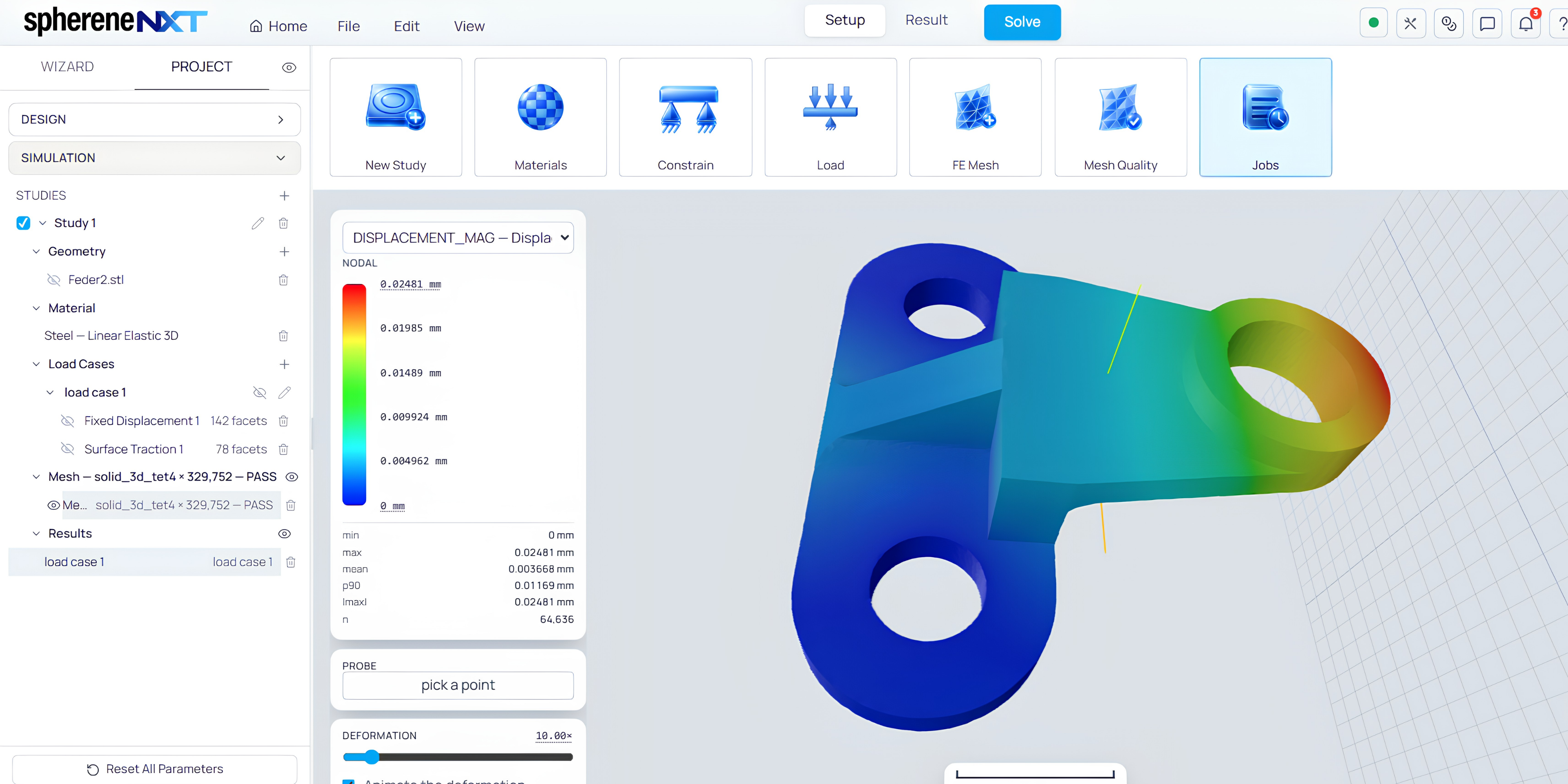
The workflow covers what a structural check needs: assigning materials, defining constraints and loads, meshing, solving in the cloud, and reading displacement, stress, and strain directly on the part. You can focus on specific regions of the result and export a point map when you need the data elsewhere to optimize your design.
Built to equip engineers, from start to finish
At Spherene, our focus has always been the inside of the part. sphereneNXT brings ADMS, TPMS, and Beams together in one workspace, so engineers can choose the right internal structure for each application and now check how it performs in the same place.
Our goal is to give engineers everything they need to take apart from first idea to finished part, in one environment they can open from any browser. Simulation is a significant step in that direction, and it won't be the last. sphereneNXT is growing quickly, and each release brings the platform closer to covering the whole journey.
That is what we mean by engineering made simple: fewer steps between a question and an answer you can trust, without giving up the depth engineers expect and need.
What this first phase covers
Simulation launches with linear static analysis: linear elastic materials, small deformations, and static loads. Within that scope, it answers the core structural question most designs face, in the same place the design is made.
Availability
Simulation is not included in every sphereneNXT plan. If you don't see it in your account, or want to add it, contact us at support@spherene.io and we'll help you find the right setup.
Get started sphereneNXT 2.0
Already have an account? Log in to sphereneNXT, start using simulation, and keep an eye on what comes next.
New to sphereneNXT? Register here - start your trial and run your first study.
Need help? Send us an email at support@spherene.io
Spherene it. Engineering made simple.