
%20(1).png?width=1702&height=630&name=SPHEREN%20BLOG%20-%20ADMS%20(Facebook%20Cover)%20(1).png)
A platform built entirely around internal structure
Spherene has always cared about one thing above all: what happens inside a part. The outer shape gets the attention, but the internal architecture is what decides how much a part weighs, how it carries load, how it moves heat, and whether it can be built at all.
On June 30 we launched sphereneNXT, the biggest step yet in how engineers work with the internal structure of a part. It is a browser platform devoted entirely to internal structure. The same patented technology at the core, now with a whole environment built around it, and around the people using it.
The idea is simple: give the inside of the part the attention it deserves and make that the easiest part of the job instead of the hardest. A guided wizard can take you from a CAD file to a print-ready structure step by step, or you can drive the workflow yourself.
Here is what that focus actually solves.
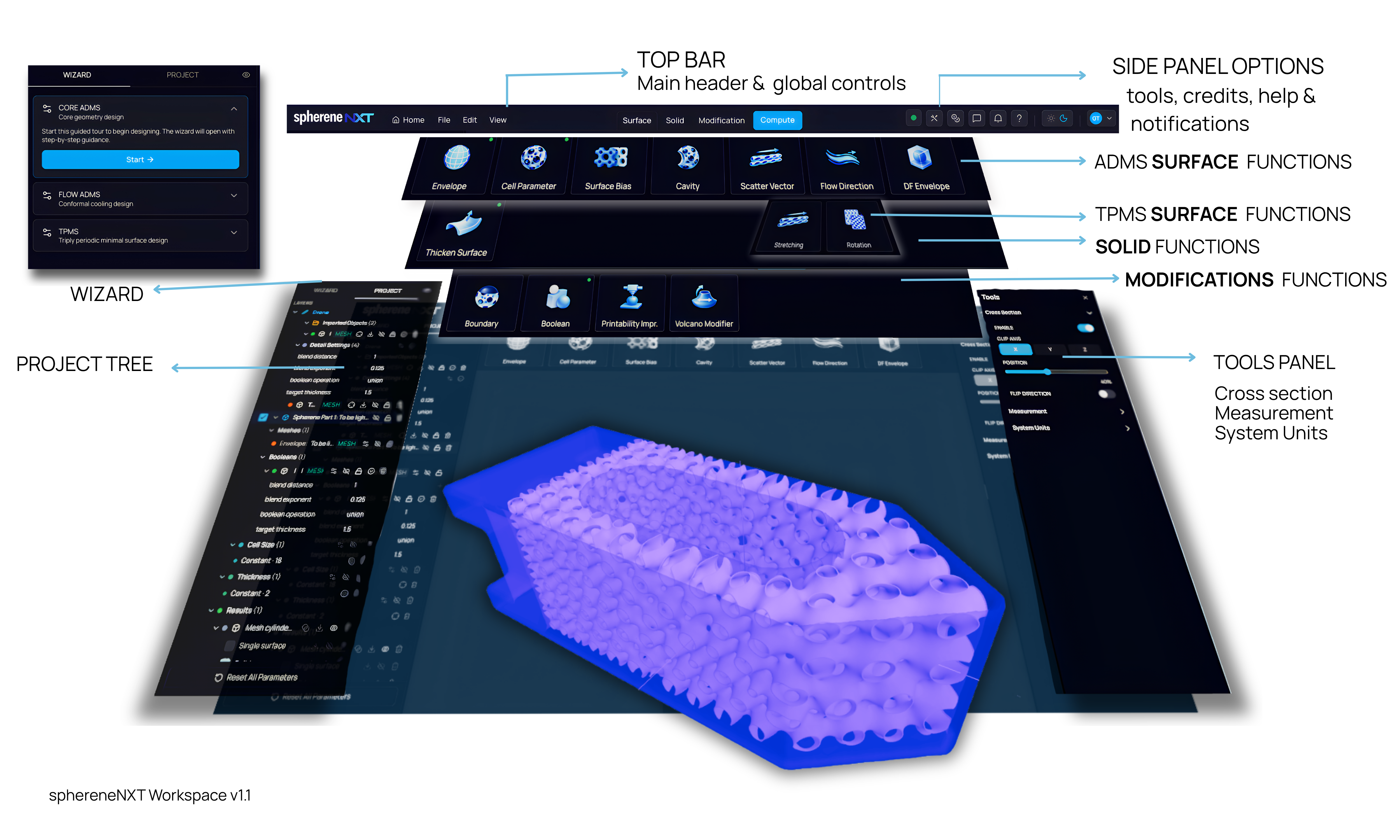
The sphereneNXT workspace: the guided wizard, the surface, solid, and modification toolbars, the project tree, and a live 3D viewport, all in one place.
Start from the part you already have
You have spent enough time modeling. You should not have to rebuild your part to work on the inside. The Envelope step takes your existing object and fills it with the structure you need. sphereneNXT is not another modeler competing for that work, it picks up where your CAD tool leaves off.
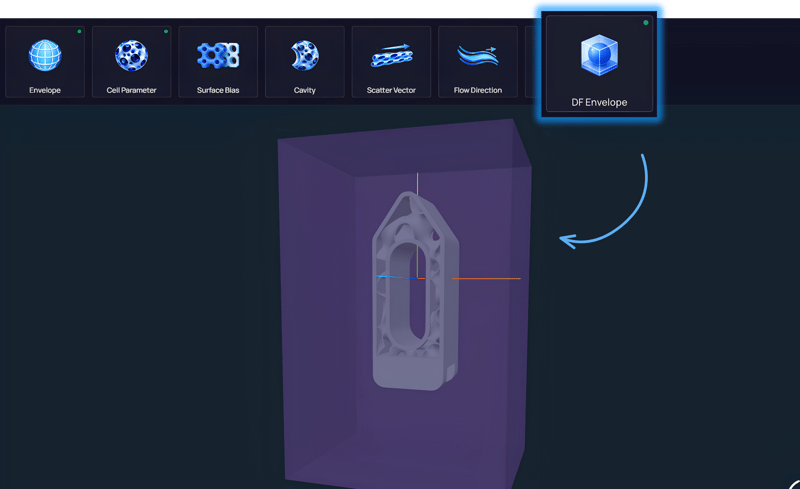
And the structure holds up at the hard parts. Sharp edges and tight corners are where an ADMS structure has the most to resolve, and the DF Envelope step carries the pattern cleanly all the way into them. Nothing is left hollow or under-built at the very features that often see the highest stress, so the whole part is engineered end to end, not just through its easy middle.
Work with the loads, not against them
Sometimes a uniform structure is exactly right, and sphereneNXT gives you that. But the real advantage of designing from the inside is control over where the material goes. With a thickness and density gradient you can strengthen the structure along the load paths and thin it out everywhere else, and you can drive that gradient straight from your own simulation, so the part follows your analysis instead of your best guess. Lightweighting without the guesswork.
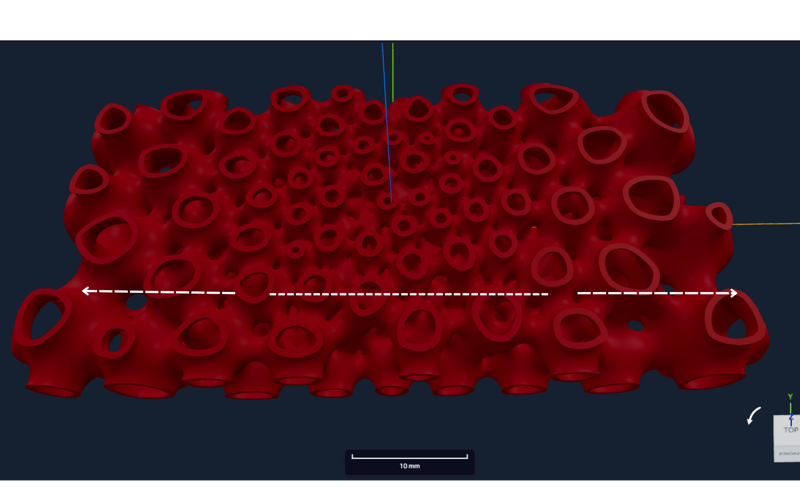
This is where ADMS, our patented technology, leads. It adapts its density to the part and the way it is loaded, so the transition stays smooth and continuous rather than stepped. This smooth transition of internal structures avoids the earlier failure due to the concentration of force or heat. Alongside it sits a full library of proven Triply Periodic Minimal Surfaces (TPMS) structures, so you pick the right internal geometry for each job rather than forcing one pattern to fit every part.
Tune Anisotropy Where You Need It
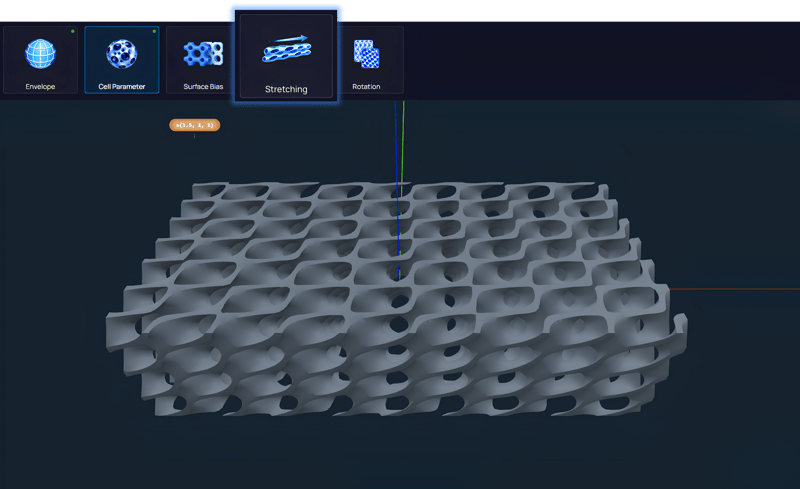
Direction matters in a structure. Spherene's ADMS starts from a balanced baseline, naturally close to isotropic and near enough to equally stiff in every direction, so nothing about the geometry has pre-decided how your part behaves. From there you add stiffness only where the part needs it. That is what the Scatter Vector function does, stretching the structure along chosen directions to introduce controlled anisotropy exactly where you want it, so you can tune stiffness and stress response for demanding, real-world load cases.
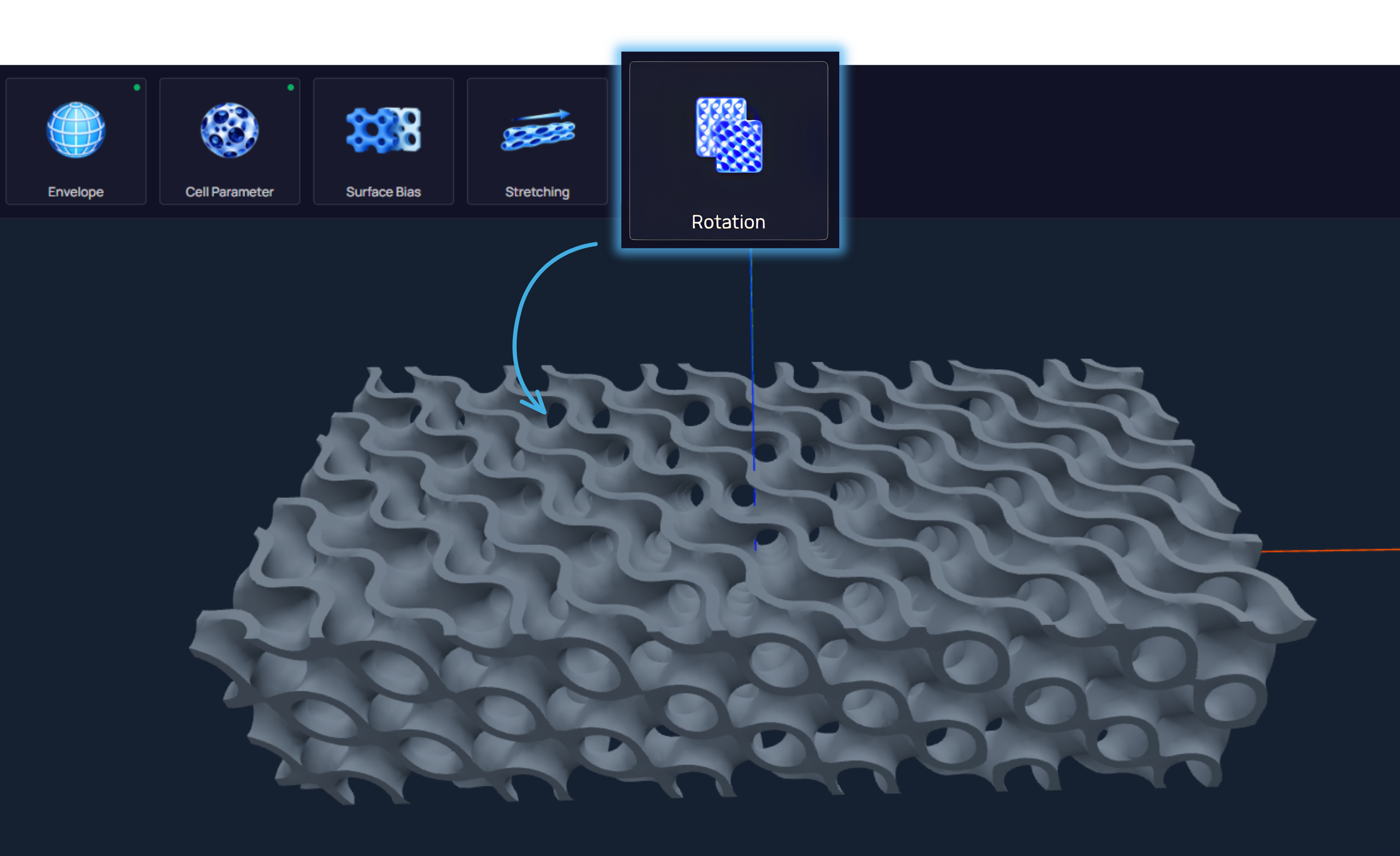
Here is where sphereneNXT does something no other tool does. Take a TPMS structure like the gyroid: cell size, rotation, and stretching are not locked to a single global value, they can each be graded smoothly across the envelope, all at once. Grading rotation and stretching together, region by region, is genuinely new, and it changes what a single part can do. Instead of one setting applied everywhere, you align stiffness and stress response with local demands and let one part answer several load cases at once. That is not a small refinement. It is a different way of controlling how a structure behaves.
Design parts that manage heat and flow
Heat exchangers and cooling parts usually force a trade-off: push thermal performance up and pressure drop climbs with it, and so does the energy needed to move fluid through. FlowADMS’ Flow Direction guides the structure along the path the fluid takes, holding heat transfer high while easing that pressure drop, and it can follow a flow field straight from your own analysis. When the two internal spaces need to be different sizes, Surface Bias lets you tune them.
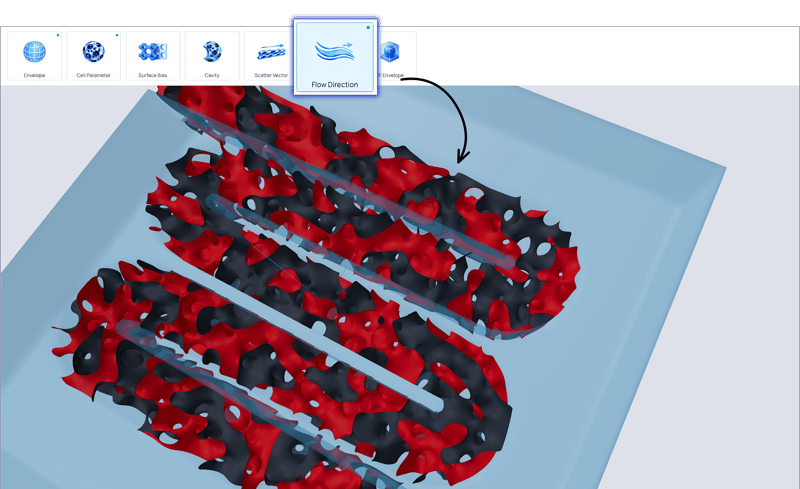
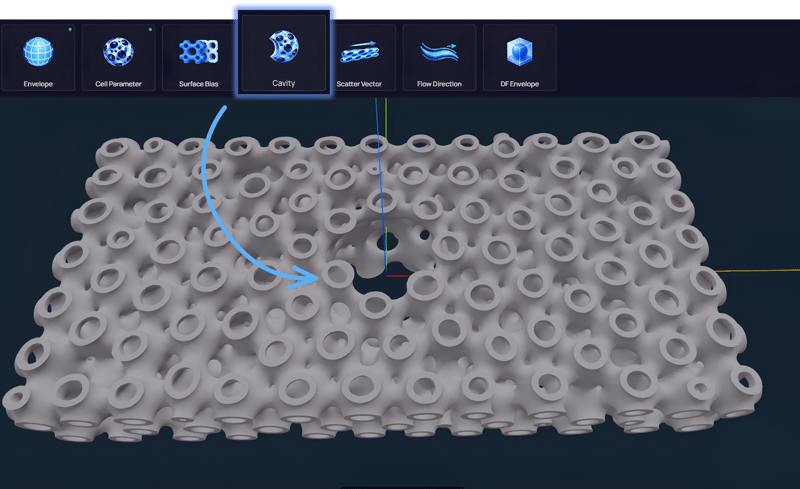
The minimal surface does the hard part on its own: it divides the interior into two separate channel networks that never mix, one for the hot fluid and one for the cold. The remaining challenge is getting each fluid into the right network. That is what Boundary and Cavity are for, letting you place inlets and outlets, so each one connects to its intended channel without opening into the other.
Turn it into a part you can build
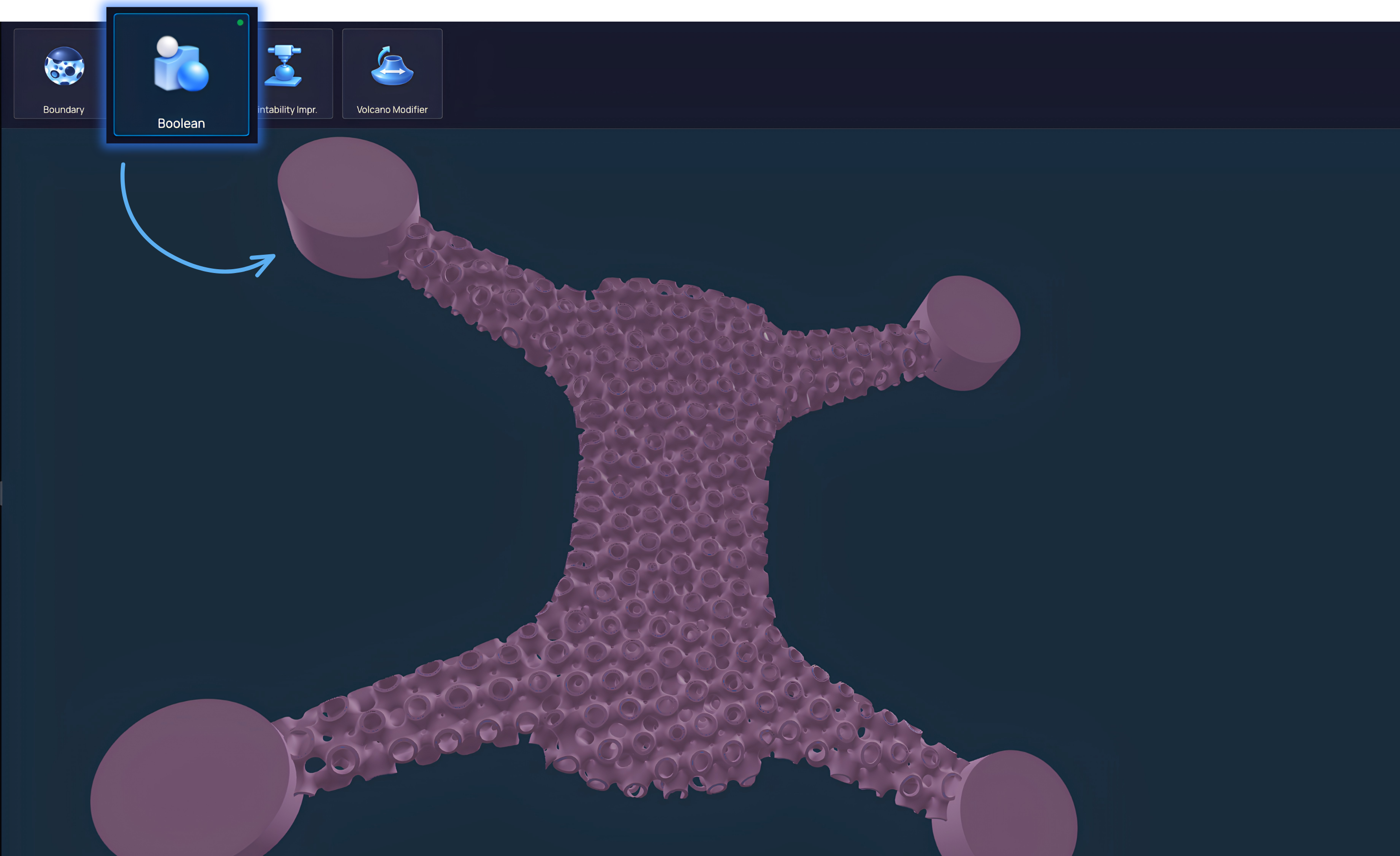
A brilliant internal structure is worthless if it cannot be printed or cannot attach to anything. Thicken Surface gives the structure real walls, strong enough to hold up and sized to print well, and you can vary that thickness across the part where it helps. Boolean brings in the practical features a real part needs with the designed internal structure, mounting points, interfaces, and bosses, or cuts space out for them.
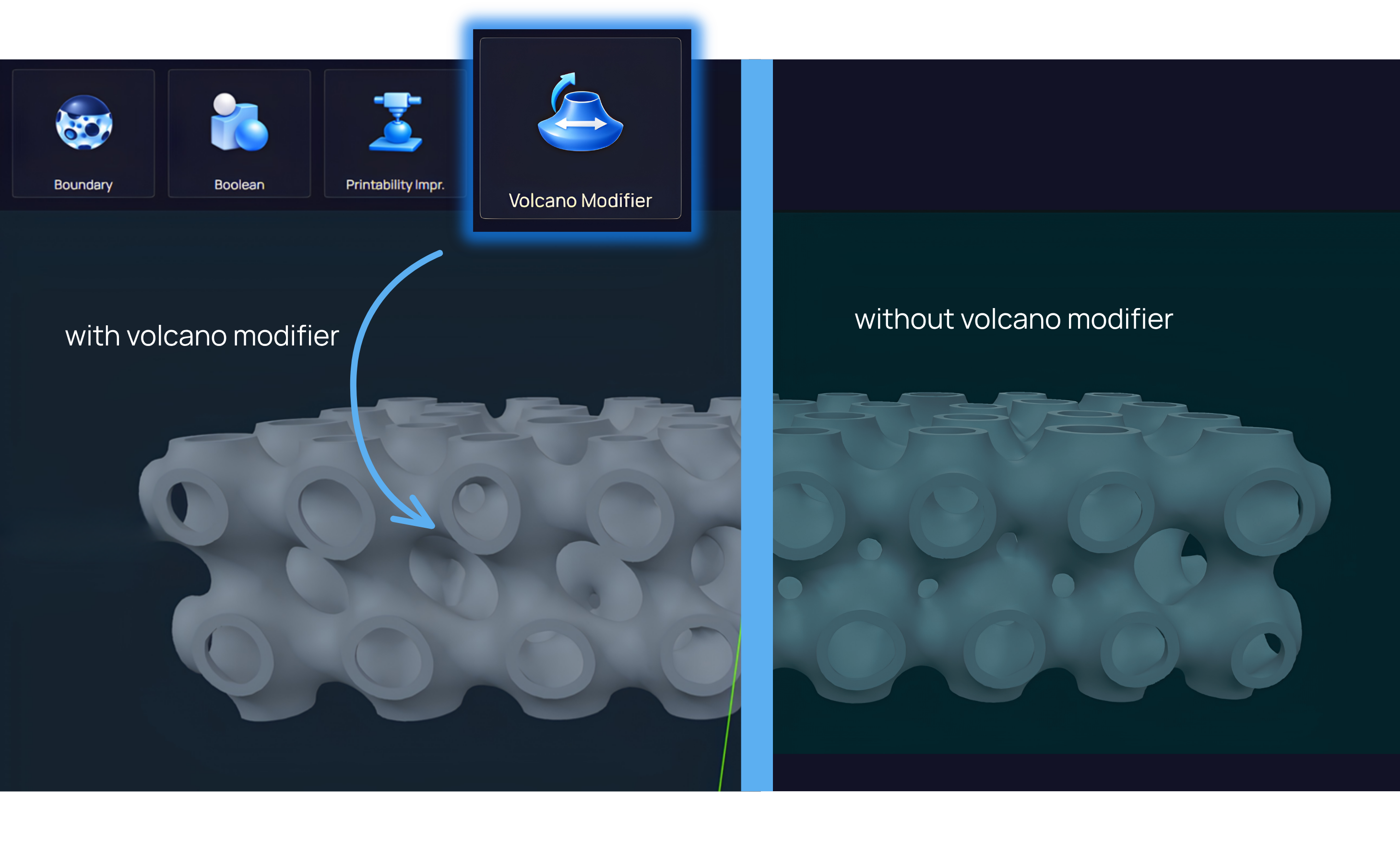
Printability Improvement then conditions the result for the printer, reinforcing it in the direction parts most often fail and easing the overhangs that cause trouble, so what you designed is what comes off the plate. And when appearance matters, Volcano Modifier adds surface texture, whether functional or purely visual.
Export in the form your pipeline needs
When you compute, the platform hands you the geometry in whatever form the next step calls for: a solid part ready to manufacture, separate fluid networks for a heat exchanger, or a lightweight surface to carry forward. Results are repeatable, at whatever level of detail you need.
Start today
Because sphereneNXT lives in the browser, there is nothing to install and nothing tied to one machine. Any engineer with a CAD file can open it on any operating system, pick their projects back up across devices, and know their data is stored in Europe. There is a free trial to get a feel for it and plans that scale from makers and students to professional teams and enterprises.
Bring a part, open the wizard, and design it from the inside out.